
Complete Concussions Program
Head Injury Care
As a certified Complete Concussions location, we offer an evidence-based concussion management program, including pre-season baseline testing and rehabilitation, to help patients and athletes safely return to their activities.
Comprehensive Concussion Assessment & Rehabilitation
Concussions are complex injuries. Recovery is not always as simple as rest and time.
As a certified Complete Concussions location, TIHC provides a full evidence-based concussion management program, including everything from pre-season baseline testing to concussion treatment and rehabilitation, helping our patients and athletes safely return to learn, work and play. Dr. Gendron and Dr. Morris are both trained in this comprehensive system, designed to support safe recovery and a confident return to school, work, and sport.
What Is the Complete Concussions Program?
A concussion is a brain injury caused by a rapid change in movement following a strong blow to the head or body. This impact disrupts brain cell function and reduces blood flow, leading to temporary challenges in brain activity.
The Complete Concussions program is a standardized, research-informed approach to concussion assessment and rehabilitation. It goes beyond simple rest recommendations and provides a structured framework to evaluate:
- Vestibular (balance) function
- Visual tracking and eye coordination
- Cervical spine (neck) involvement
- Exercise tolerance
- Neurological symptoms
- Cognitive function
If these systems are not evaluated properly, symptoms can linger — leading to ongoing headaches, dizziness, fatigue, difficulty concentrating, and frustration.
The Complete Concussions program provides a clear roadmap. Instead of guessing, we assess each system carefully and create a plan based on objective findings.
Common Concussion Symptoms
Concussion symptoms may appear immediately or develop over several hours or days. Symptoms vary from person to person, but may include:
- Loss of consciousness
- Headaches
- Dizziness or balance problems
- Sensitivity to light or noise
- Blurred vision
- Neck pain
- Nausea or vomiting
- Fatigue
- Brain fog or difficulty concentrating
- Irritability or mood changes
Persistent symptoms do not mean permanent damage. They often indicate that one or more systems still require targeted rehabilitation. If symptoms persist beyond the initial days after injury, a structured rehabilitation approach can help support recovery.
Our Approach to Concussion Rehabilitation
Following a concussion injury, it is recommended that you seek the care of a healthcare professional with training and experience in concussion as soon aspossible. In fact, recent studies have concluded that one of the best predictors of concussion recovery was how quickly you were assessed at a concussion clinic.
The earlier you seek quality concussion care, the better your recovery will be. Generally, a period of relative "symptom-limited" physical and cognitive rest is recommended for the first 24-48 hours after injury. After this rest period, a gradual increase in mental and physical activity is recommended. For optimal recovery, this process should be directed and supervised by a licensed healthcare practitioner trained in concussion management.
At TIHC, your initial appointment includes a detailed history and comprehensive testing to identify which areas are contributing to your symptoms.
From there, your personalized recovery plan may include:
- Cervical spine therapy for associated neck strain
- Vestibular rehabilitation for dizziness or balance issues
- Visual retraining exercises
- Graduated return-to-exercise programming
- Education and symptom management strategies
Recovery is active and progressive — not passive. Our goal is not just symptom reduction — it’s safe, measurable progress toward full recovery.
Pre-season Testing
Multimodal pre-season testing (AKA Baseline Concussion Testing) is a series of physical and cognitive tests that provide a pre-injury overview of healthy brain function. In other words, we test your balance, your reaction time, your memory, your visual tracking speed, and a whole bunch of other brain functions. This gives us a map of how your brain functions when you are healthy.
If you sustain a concussion, we can use your pre-injury results to see not only wherethe deficits are, but how much deficit exists. This can help us both with ourtreatment strategy and with developing a better understanding of when you're brainhas recovered and you are safe to return to your sport.
It’s important to remember that not all baseline testing is created equal. The Complete Concussions protocol is unique in that it combines the best evidence-based tools available so that you are getting the most complete brain map available.
Concussion Tracker Smartphone Application
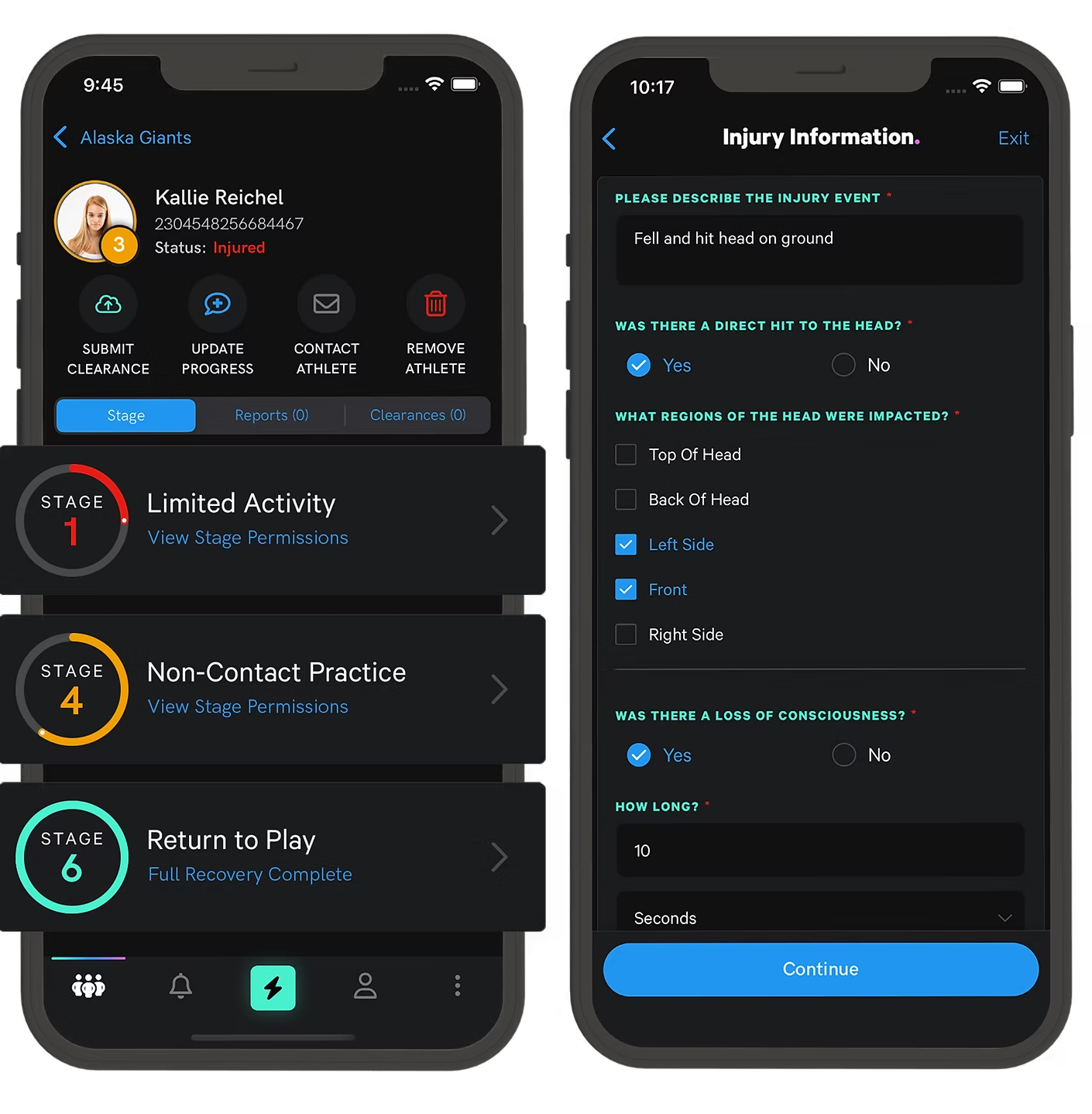
The Concussion Tracker smartphone app supports safer return-to-sport decisions for young athletes and helps with your concussion care overall. The app captures and shares an athletes’ concussion status in real time and allows concussed patients to interact with their care provider and provide regular symptom updates and clinical check-ins.
Where a concussion hits, Concussion Tracker allows users to:
- Perform neurocognitive assessments and compare to baseline
- Report and track concussions
- Conduct sideline assessments
- Ensure seamless communication
- Record athlete’s recovery status and timeline
- Scan and share medical documents
- Track daily symptoms for recovery progress
- Store and view pre-season baseline concussion test results
Download the Concussion Tracker app for free today on the App Store and Google Play!
Our Concussion Practitioners


Begin Your Recovery ASAP
If you or your child has experienced a concussion, early assessment and guided rehabilitation can help restore momentum and confidence. Book an appointment with Dr. Gendron or Dr. Morris to begin your recovery through the Complete Concussions program at TIHC.

FAQs
Common questions our patients ask.